
Home / Blog / Beyond the Hype: What We Learned Testing Browser Agents
Beyond the Hype: What We Learned Testing Browser Agents with Claude, GPT-4o, and Open Source Models
Harish Govindaraju


Browser AI Agents: Real-World Findings and Lessons from Implementation
Written by Sai Nivedh — with contributions from the IdeaBoxAI team
Browser Agents are gaining popularity as an intuitive solution to control and automate interactions with websites. Their ability to replicate human-like browsing behavior opens up possibilities for autonomous workflows. Our team recently explored Browser Agents deeply across multiple models and platforms, and here’s what we discovered.
Quick Overview: What Are Browser Agents?
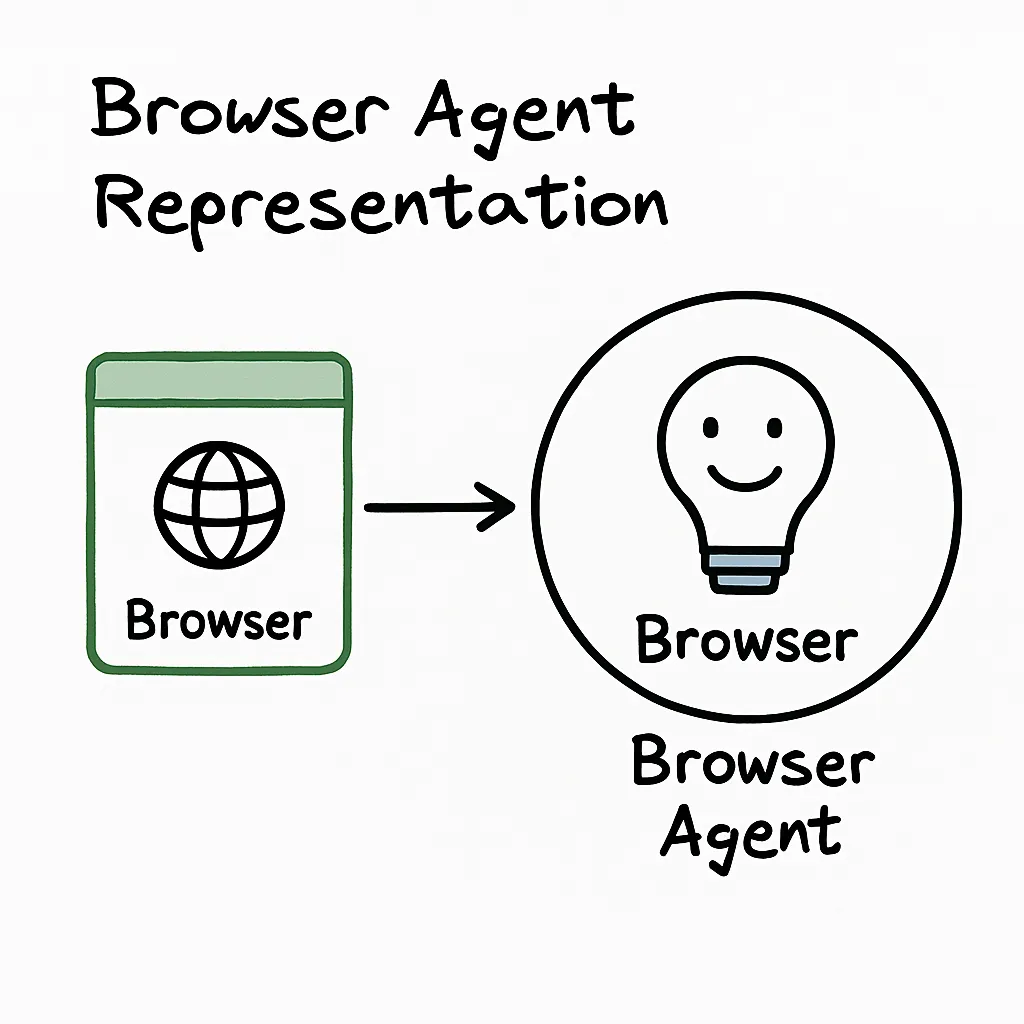
Browser Agents act as AI-driven automation agents that operate within a browser. Think of them as an intelligent robot with a web browser, capable of navigating sites, clicking buttons, filling out forms, and scraping data, all based on natural language instructions.
What We Tested
We evaluated several popular Browser Agents, including both proprietary and open-source implementations. Among these:
Open-source Browser-Use agents stood out in terms of stability and performance.
Native compatibility with models like Gemini, Claude, and OpenAI was noted.
Despite the promise, the results varied depending on the LLM powering the agent.
The Model Showdown
We ran the same browser automation tasks across various models:
Gemini (Various Versions)
While promising on paper, Gemini models didn’t perform as expected for our specific tasks.
Struggled with accurately selecting required parameters.
Despite multiple attempts, results were inconsistent, so we decided to exclude it for this use case.
GPT-4o & Claude 3.5/3.7 Sonnet
These premium models showed strong performance overall.
Claude 3.7 Sonnet, in particular, consistently picked the right parameters with minimal human correction.
Challenges We Faced
Even with high-performing models, there were notable issues:
Rate Limits & Token Caps: Particularly with Claude, we hit token limitations often.
Token Cost: Dry runs (5–10 times) led to ~$15 in spend.
Speed: Agents take time to plan steps, making them slower than manual execution.
To mitigate these, we:
Reconstructed prompt templates for better token optimization.
Implemented rate-limit handling mechanisms.
Open Source + Groq = Ongoing Exploration
We’re actively exploring ways to combine open-source models (like LLaMA) with Groq for faster inference and lower latency.
Most browser agent wrappers don’t currently support Groq out of the box.
We’re customizing open-source codebases to integrate Groq APIs and expand compatibility.
This is an ongoing journey, and we’re optimistic about the potential it holds.
Bottom Line
While Browser Agents are powerful and conceptually exciting, they come with practical trade-offs:
⚡ Slower execution
💸 Higher cost (token usage)
🎯 Requires precise model tuning and prompt design
That said, Claude 3.7 Sonnet + Browser-Use was the most promising combo for our use case.
We’re continuing to refine our workflows, especially by integrating fast open-source models on Groq.
Visual Summary: Browser Agent Comparison
+---------------------+------------------+---------------------+-------------------+
| Model               | Accuracy         | Token Usage         | Human Involvement |
+---------------------+------------------+---------------------+-------------------+
| Gemini (all variants)| 🔸 Moderate       | Medium              | High              |
| GPT-4o              | ✅ High           | ⚡ Very High         | Medium            |
| Claude 3.7 Sonnet   | ⭐ Very High      | High                | ✅ Low            |
+---------------------+------------------+---------------------+-------------------+
Stay tuned for our next post where we open-source our modified Browser Agent wrapper with Groq integration.
#AIagents #LLM #BrowserAutomation #Claude #GPT4o #Groq #OpenSourceAI #AgenticDesign
Share Blog




READY TO BEGIN
Build AI Around the Way Your Teams Work
Start with one role, one workflow, and one measurable outcome.
Talk to an Expert